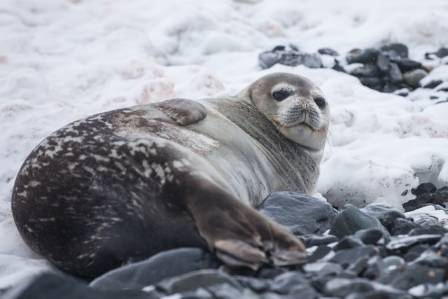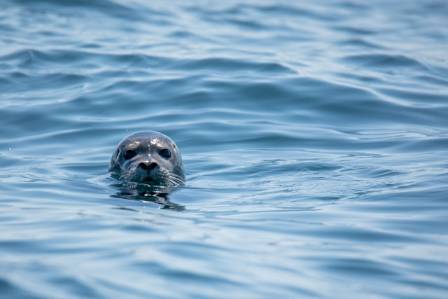
Seals, also called pinnipeds, are a fascinating group of semi-aquatic, meat-eating mammals. They are divided into three main groups and represent the most species-rich living clade of marine mammals.
Today, there are 33 recognized seal species worldwide, but fossil evidence shows that over 50 species existed during their evolutionary history, dating back to the late Oligocene, around 27–25 million years ago.
The three pinniped families are: Phocidae, the true seals; Otariidae, which includes fur seals and sea lions; and Odobenidae, represented today solely by the walrus. Early pinnipeds were aquatic carnivores with paddle-shaped limbs and may have passed through a freshwater stage as they transitioned from land to a life mostly spent in water. Let’s dive deeper into some incredible seal facts.
Seals Are Distantly Related to Bears, Skunks, and Badgers
Scientists have debated the evolutionary origins of seals for over a hundred years. While it’s widely accepted that pinnipeds evolved from land-dwelling carnivores, the exact steps of their transition to fully marine mammals remain under discussion. Pinnipeds belong to the Caniformia suborder, which also includes bears (Ursidae), weasels and badgers (Mustelidae), and skunks (Mephitidae). In 2007, researchers uncovered a nearly complete semi-aquatic carnivore skeleton in Nunavut, Canada, offering evidence of a link between terrestrial ancestors and modern seals.
“Earless” Seals Still Have Ears
True seals (phocids) are often called “earless” because they lack external ear flaps, unlike sea lions and fur seals (otariids). However, these seals do have ears under the skin. True seals hear higher-frequency sounds better underwater, while otariids are more sensitive to airborne sounds. All pinnipeds hear underwater more effectively than in the air.
The Largest Seal Can Exceed Four Tons
Southern elephant seals hold the title for size, with males averaging around 8,000 pounds (3,600 kilograms), while females are much smaller. In contrast, the tiny Galapagos fur seal, part of the otariid family, weighs just 60–140 pounds. Nearly all seals, except the nearly hairless walrus, are covered in thick fur and have layers of insulating fat called blubber to stay warm.
Mothers and Pups Recognize Each Other by Voice
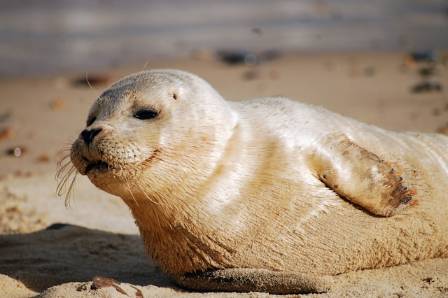
Studies on harbor seals showed that mothers can identify their pups by their calls as early as three days old. Researchers found that mothers responded more to their own pups than to unrelated pups. The strength of vocal recognition depends on species, especially where pups are mobile and colony densities are high, prompting mothers to develop stronger identification skills.
Seals’ “Smokers’ Blood” Supports Deep Diving
Seals have unusually high levels of carbon monoxide in their blood—similar to humans who smoke—but for different reasons. This naturally occurring carbon monoxide helps seals survive long dives. For example, elephant seals spend about 75% of their lives holding their breath, and their high carbon monoxide levels allow them to conserve oxygen efficiently.
The Baikal Seal Is a Freshwater Survivor
The Baikal seal, one of the smallest true seals, lives entirely in freshwater in Lake Baikal, Siberia. This unique species reflects an evolutionary stage when seals may have spent part of their lives in freshwater before fully adapting to oceanic life. Lake Baikal is the planet’s deepest and oldest freshwater lake, hosting many rare species.
Brain Temperature Drops During Dives
Research on hooded seals revealed that their brain temperature can drop by about 3°C during a 15-minute dive. This cooling reduces oxygen usage in the brain by 15–20%, allowing seals to stay underwater longer while protecting their brains from low-oxygen damage.
They Eat Plenty of Seafood
Seals primarily feed along coastlines on fish, squid, shrimp, and other crustaceans, mollusks, and plankton. Larger species may consume up to 10 pounds of food daily. Scientists monitor seal populations carefully to understand their impact on prey species like salmon and to ensure both seal conservation and sustainable fisheries.
Climate Change Threatens Their Habitat
Historically, hunting, trapping, pollution, and human conflict have threatened seals. Today, climate change is an increasing danger. For example, Arctic species such as bearded and ringed seals are losing their sea-ice habitats and are listed as threatened. Past extinctions, like the Japanese sea lion and Caribbean monk seal, highlight the risks of human-driven environmental changes. Conservation groups are working to protect seals and adapt their habitats as the climate shifts.