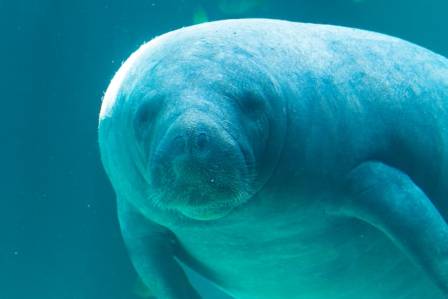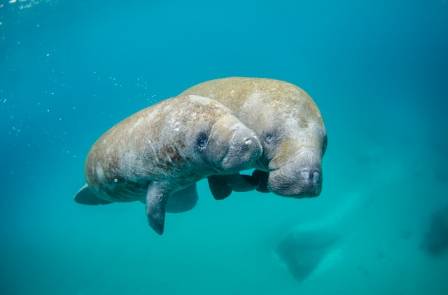
The manatee is a massive, slow-moving aquatic mammal that thrives in shallow, temperate waters. Often called "sea cows," these peaceful creatures are vital to their ecosystems, acting as natural landscapers by managing the density of aquatic flora. Despite their size and resilience, they remain highly susceptible to environmental changes and human activity, making their protection a priority for conservationists.
Physical Characteristics and Growth
Adult manatees are substantial in size, typically reaching lengths of 10 feet and weighing between 800 and 1,200 pounds. Some individuals far exceed these averages; the most massive specimen ever documented reached 13 feet in length and tipped the scales at over 3,500 pounds.
This impressive growth begins with a year-long gestation period. At birth, a manatee calf weighs approximately 60 to 70 pounds. Newborns enter the world tail-first and remain dependent on their mothers for a significant period, nursing underwater for about two years to ensure they develop the necessary fat reserves and survival skills.
Habitat, Distribution, and Lifespan
Manatees are found in three primary geographic regions across the globe. The West Indian manatee inhabits the Caribbean Sea, the Gulf of Mexico, and the Bahamas. Its relative, the West African manatee, lives along the coastline from Senegal down to Angola, while the Amazonian manatee is found within the freshwater systems of the Amazon River basin in Brazil.
Regardless of their location, manatees are extremely sensitive to cold. They cannot endure water temperatures lower than 68 degrees Fahrenheit. During the winter months, Florida’s population frequently migrates toward the consistent warmth of natural springs or the discharge canals of power plants. In the wild, these mammals can live for five to six decades, with the oldest recorded captive individual reaching the age of 69.
Diet and Ecological Importance
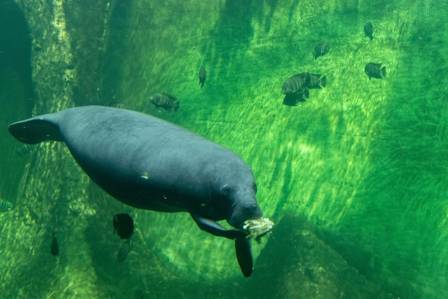
As dedicated herbivores, manatees consume a wide variety of submerged, emergent, and floating plants, including seagrass, algae, water lilies, and mangrove leaves. They use their dexterous, divided upper lips to grasp vegetation before tearing it away with their teeth. A single adult can consume up to 100 pounds of greenery daily.
By consuming vast quantities of plants like hydrilla and vallisneria, manatees prevent waterways from becoming overgrown and clogged. Furthermore, their movement and feeding habits help circulate nutrients and distribute seeds throughout their aquatic habitats, supporting a diverse and healthy underwater environment.
Evolutionary History and Population Trends
The evolutionary path of the manatee began roughly 50 to 60 million years ago, descending from a small, land-dwelling four-footed ancestor. Interestingly, their closest living terrestrial relative is the elephant, a connection visible in their grey, leathery skin and similar internal bone structures.
In Florida, recent data suggests a positive trend for the species. According to studies published in 2023 based on aerial counts, the state's population is estimated to be between 8,350 and 11,730 individuals. This marks a significant rise from 2017, when the population was estimated at just over 6,300, though they still face ongoing risks from boat collisions and the loss of essential seagrass beds.