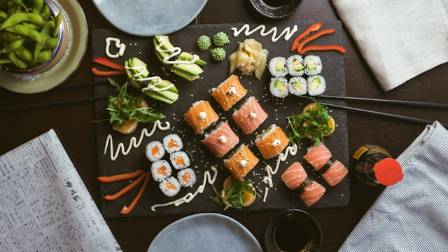
Sushi stands as one of humanity’s most extraordinary culinary evolutions, transforming from a pragmatic preservation method into a globally beloved cuisine that transcends cultural divides. This iconic dish, defined by its harmonious blend of vinegared rice and diverse ingredients—most famously raw seafood—traces its roots to Southeast Asia’s rice paddies, evolving through centuries of adaptation, refinement, and innovation to become both a symbol of Japanese culture and a staple of international dining. Its journey reflects broader narratives of technological progress, cultural exchange, economic development, and shifting social dynamics, proving that even the simplest of foods can carry profound historical weight.
Origins: The Birth of Narezushi in Southeast Asia
Sushi’s story begins over a millennium ago, around 101-200 CE, along the Mekong River basin spanning modern-day Laos, Cambodia, Thailand, and Vietnam. In a region where hot climates and limited refrigeration made food preservation a critical challenge, locals developed narezushi—a practical technique to extend the shelf life of freshwater fish. The process involved gutting fish, packing it with salt and rice in wooden barrels weighted with stones, and allowing it to ferment for months or even years through lactic acid breakdown. Notably, the rice served solely as a preservative, not as food; it was discarded before consuming the tangy, preserved fish. This method mirrored similar practices among rice-farming cultures, such as China’s Dong people who used fermented rice and chili to preserve fish—a testament to shared culinary ingenuity across Southeast Asia. Over time, this preservation technique spread northward, carried by Han Chinese migrants who adopted it from southern China’s Baiyue peoples and introduced it to Japan between 301-400 CE, laying the groundwork for sushi’s future transformation.
Japanese Adaptation: From Preservation to Culinary Delicacy
By the 8th century, sushi had become firmly rooted in Japanese food culture, with the earliest written record appearing in the 718 Yōrō Code—an administrative law that taxed fermented fish products using the characters “鮨” and “鮓,” confirming sushi’s enough significance to warrant government regulation. During the Heian period (794-1185), sushi gained prestige among the aristocracy, as documented in the encyclopedia “Wamyō Ruijushō,” which described narezushi as a rare delicacy reserved for special occasions, often paired with sake. The Kamakura period (1185-1333) saw narezushi production expand nationwide, particularly around Lake Biwa in Shiga Prefecture, where funa-zushi—fermented nigorobuna crucian carp—emerged as a regional specialty, preserving abundant freshwater fish for mountainous communities far from the sea. A pivotal shift occurred between 1401-1500, as fermentation times shortened from years to weeks, reflecting changing tastes and economic pressures favoring quicker food production. This transition marked the first step toward sushi as a culinary experience rather than merely a preservation method, with people increasingly consuming the fermented rice alongside the fish.
Edo Period Revolution: The Birth of Modern Sushi
The 17th century brought a revolution that redefined sushi forever: the introduction of rice vinegar. Documented in 1606, vinegar replaced lengthy fermentation, allowing sushi to be prepared in hours instead of months. This innovation paved the way for haya-zushi (“quick sushi”), first sold commercially in Edo (modern Tokyo) by Matsumoto Yoshiichi in the 1630s, who seasoned rice with vinegar, sugar, and salt to create a tangy base for fish. By the 1700s, sushi stalls lined Edo’s bustling streets, selling affordable, portable portions to urban workers, merchants, and artisans—transforming sushi from an elite delicacy to everyday fare. The culinary reference book “Sushi no Sho” (1799) formalized these techniques, documenting regional variations and solidifying vinegar’s central role. The greatest breakthrough came in the Bunsei Era (1818-1830), when Hanaya Yohei developed nigiri-zushi—hand-pressed vinegared rice topped with fresh raw fish. Using Mizkan’s aka-su (red vinegar) made from sake lees, his larger-than-modern nigiri eliminated fermentation entirely, prioritizing the natural flavors of fresh seafood. Yohei’s 1824 sushi shop near Ryōgoku Bridge popularized this style, offering standing-room service for quick consumption, and became renowned for its kohada (gizzard shad), shrimp, and tamagoyaki (sweet omelet) creations. This era established Edo as sushi’s innovation hub, with over 1,000-3,000 vendors operating in Tokyo by 1900.
Modern Transformation: Technology, War, and Democratization
Japan’s Meiji Restoration (1868) ushered in Westernization, bringing technologies that revolutionized sushi production. The first ice-making factory (1869) and refrigerated warehouse (1877) enabled year-round storage of fresh fish, reducing reliance on seasonal catches and expanding ingredient diversity. Western-style restaurants introduced table service, transforming sushi’s dining experience, while mechanical ice production in the 1920s further stabilized supply. The catastrophic 1923 Great Kantō Earthquake inadvertently spread Edo-style sushi nationwide: as Tokyo’s sushi chefs fled the devastation, they rebuilt businesses across Japan, disseminating nigiri techniques beyond the capital. The 1930s saw sushi enter modern retail with department store food halls selling pre-packaged portions, but World War II brought rice rationing that crippled the industry. Post-war recovery included formal regulations—1947 operating licenses and 1949 sushi guilds—that professionalized the trade, while 1954’s lifted rationing allowed free rice access. A defining innovation came in 1958, when Yoshiaki Shiraishi invented kaiten-zushi (conveyor belt sushi) after observing beer bottle conveyors. His 8-centimeters-per-second belt speed and horseshoe-shaped design reduced labor costs, democratizing sushi with affordable, casual dining. By the 1960s, Japanese airlines served sushi on long-haul flights, introducing it to international travelers as a symbol of cosmopolitan taste.
Globalization: Adapting to Western Tastes and Markets
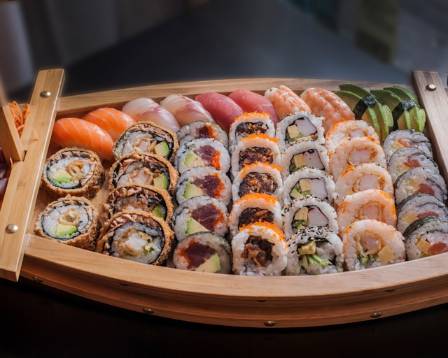
Sushi’s global journey faced early resistance: Westerners initially rejected raw fish, as seen at Chicago’s 1893 World’s Columbian Exposition where sushi remained a curiosity. The breakthrough came in the 1960s-70s, as Japanese restaurants in Los Angeles’s Little Tokyo began courting non-Japanese diners. Kawafuku Restaurant (1966) adapted presentations and explained preparations, while the California roll emerged as a game-changer—though its origins are debated. Some credit Los Angeles chefs Ichiro Mashita and Ken Seusa for replacing fatty tuna with avocado and hiding nori (seaweed) inside rice (uramaki style) to suit Western palates; others highlight Vancouver’s Hidekazu Tojo, who similarly modified sushi to appeal to Canadians uncomfortable with raw fish and seaweed. The 1974 FDA guidelines for freezing raw fish to kill parasites addressed safety concerns, while New York’s 1977 upscale sushi bars marketed it as a luxury, health-conscious choice. The 1980s brought mainstream acceptance: spicy tuna rolls (invented 1981) added bold flavors, and sushi spread to U.S. cities beyond coastal hubs. By the 1990s, sushi conquered Europe, Asia, and post-Soviet bloc countries, with conveyor belt restaurants making it affordable for families. Supermarket sushi debuted in the UK (1998) and U.S. (2006), completing its transition from exotic to everyday. Chef Nobu Matsuhisa’s global expansion elevated sushi to fine dining, blending Japanese and South American flavors, while Jiro Ono’s 2001 Michelin three-star Sukiyabashi Jiro romanticized traditional craftsmanship—popularized further by the 2011 documentary “Jiro Dreams of Sushi.”
Contemporary Sushi: Sustainability, Innovation, and Cultural Recognition
The 21st century has seen sushi grapple with sustainability and embrace innovation. Growing global demand led to overfishing concerns, particularly for bluefin tuna—exemplified by the 2019 Toyosu Market auction where a single fish sold for $3.1 million. Organizations like Monterey Bay Aquarium released the Seafood Watch guide (2007) to promote responsible choices, while biotech companies like Finless Food developed lab-grown tuna using cellular agriculture, reducing environmental impact and eliminating contaminants like mercury. UNESCO’s 2013 designation of washoku (traditional Japanese cuisine, including sushi) as Intangible Cultural Heritage recognized its role in strengthening community bonds and connecting to nature. Sushi has adapted to diverse diets with vegan/vegetarian options using marinated tofu and plant-based fish substitutes, while 2015’s sushi burritos merged Japanese ingredients with Latin American portability. The COVID-19 pandemic accelerated delivery services and home-making kits, while “ghost kitchens” and sushi vending machines expanded access. Technological innovations include AI-assisted fish quality assessment and automated sushi machines, though traditional chefs uphold handmade superiority. By 2024, the global sushi market is projected to exceed $30 billion, with strong growth in China, South Korea, and Southeast Asia, proving its status as a truly universal cuisine.
Final Thoughts: Sushi as a Cultural Bridge
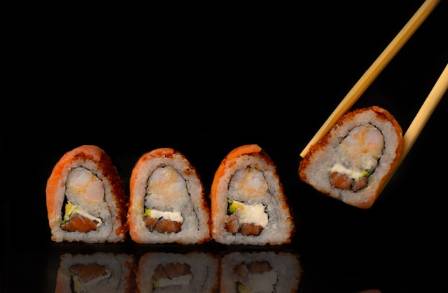
Sushi’s evolution from a humble preservation technique to a global phenomenon mirrors humanity’s capacity for creativity and connection. Its journey—from Southeast Asian rice barrels to Tokyo’s Michelin-starred counters, from Los Angeles’s fusion rolls to African cities’ expatriate eateries—reflects how food adapts to cultures without losing its essence. Sushi has shaped trade routes, influenced fishing practices, and redefined restaurant culture, all while serving as a bridge between traditions and modernity. Today, whether enjoyed as a $5 supermarket bento, a $500 omakase experience, or a home-made roll from a pandemic-era kit, sushi remains a testament to culinary ingenuity. Its ability to honor tradition while embracing innovation—from lab-grown fish to digital-age marketing—ensures it will continue to captivate global audiences for centuries to come.