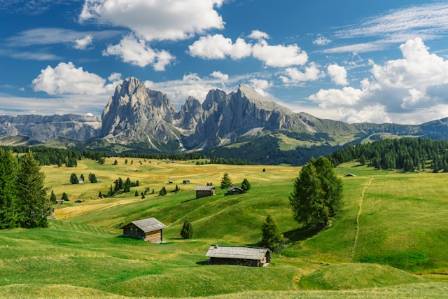
Nestled in the heart of the Dolomites, Alpe di Siusi, known as Seiser Alm in German, offers a captivating blend of natural beauty and outdoor adventure. This expansive alpine plateau boasts rolling green meadows, awe-inspiring mountain vistas, and an extensive network of hiking trails that could easily fill multiple trips. Summer transforms it into a hiker’s and cyclist’s paradise, while winter blankets it in snow, turning it into a sprawling ski area with some of the most stunning views in the Dolomites.
Having visited in early November, when the first snowflakes dusted the landscape, and again in June, where sunshine alternated with refreshing rain showers, we’ve experienced its charm in transition. While we haven’t explored its ski slopes firsthand, this guide covers everything from getting there to where to stay, ensuring you make the most of your visit, no matter the season.
A plateau brimming with possibilities, Alpe di Siusi’s allure lies in its unique geography: a vast, relatively flat expanse at 2,000 meters, surrounded by jagged peaks. Cosy mountain huts dot the trails, offering perfect spots to rest and refuel, while the ever-changing scenery ensures every step feels new. Read on to discover how to reach this alpine gem, navigate its trails, choose the best time to visit, and find the ideal place to stay.
Where to stay on Alpe di Siusi/Seiser Alm
Value for money: Paradiso Pure.Living – A vegan-friendly hotel with a spa and panoramic mountain views, situated right on the Alpe di Siusi plateau. Our three-night stay here was thoroughly enjoyable, making it a top pick for those seeking comfort without overspending.
Luxury: COMO Alpina Dolomites – A centrally located 5-star hotel featuring a spa, pools, in-room yoga amenities, and ski-in/ski-out access during winter, perfect for indulging in a premium experience.
Luxury: Hotel Steger-Dellai – Boasting modern rooms, a spa, and stunning views of the Sciliar mountain, this hotel blends contemporary comfort with alpine charm.
What is Alpe di Siusi?
Alpe di Siusi (Seiser Alm) holds the title of Europe’s largest mountain plateau and alpine meadow, a distinction that shapes its unique character. Unlike the steep, rugged terrain typical of the Alps, this plateau offers open, gently rolling green meadows and soft hills, creating a striking contrast against the dramatic peaks that encircle it.
In winter, it becomes part of the Dolomiti Superski network, while summer draws outdoor enthusiasts for hiking, cycling, and leisurely nature walks. Bordered by several towns and surrounded by iconic Dolomite peaks, the plateau is mostly accessible only by cable car for much of the year—though timing your visit strategically can unlock alternative routes.
Alpe di Siusi or Seiser Alm?
Traveling through the Dolomites, you’ll quickly notice many places have dual names—often an Italian version and a German one, with some areas also using Ladin, an ancient local language. This linguistic duality stems from historical shifts: after World War I, Italy took control of the region from Austria and began translating over 16,000 place names, even though German remained the primary language for most residents—a trend that continues today in South Tyrol.
While this might feel confusing at first, it becomes second nature. In this guide, we’ll use both names to keep things clear.
Map of Alpe di Siusi
Alpe di Siusi (Seiser Alm) is located in the South Tyrolean section of the Dolomites, in northern Italy. Spanning approximately 56 square kilometers, it sits between 1,680 and 2,350 meters above sea level, with its borders touching the towns of Siusi allo Sciliar (Seis am Schlern), Castelrotto (Kastelruth), and Ortisei (St. Ulrich) in the Val Gardena (Gröden) valley.
The plateau is framed by some of the Dolomites’ most famous peaks, including Sassolungo (Langkofel), Sasso Piatto (Plattkofel), Marmolada (Marmolata), and Sciliar (Schlern), adding to its dramatic appeal.
Why visit Alpe di Siusi
While the Dolomites are renowned for their towering peaks, glistening lakes, and sheer cliffs, Alpe di Siusi offers something distinct: an open, elevated landscape that provides unobstructed views of the surrounding mountains. Its extensive network of easily accessible trails is a standout feature, with gentle slopes and mostly flat terrain making it ideal for hikers, cyclists, cross-country skiers, and families with children.
Many paths are flat or only slightly undulating, allowing you to immerse yourself in nature without tackling strenuous climbs. In winter, the plateau becomes a serene ski area with wide pistes and snowy vistas, prioritizing enjoyment over steep, challenging runs. Whether you’re seeking relaxation or adventure, Alpe di Siusi delivers.
How to get to Alpe di Siusi
By car
To minimize traffic, access to Alpe di Siusi is primarily via cable car, but driving is possible with seasonal restrictions. During summer and winter, private vehicles are barred from the plateau between 9:00 AM and 5:00 PM, so plan to arrive early or late in the evening if driving yourself.
If you’ve booked accommodation at one of the few hotels on the plateau—a highly recommended choice—you’re permitted to drive directly to your hotel on arrival and departure days during summer. Winter conditions, however, make driving around the plateau impractical; instead, park in Compaccio (Compatsch), where most hotels offer free shuttle services to your door (as was the case during our stay). Always check with your hotel about transfer arrangements, as some are within walking distance of the car park.
By cable car
The most convenient way to reach Alpe di Siusi is by cable car. The most popular departure point is Siusi allo Sciliar (Seis am Schlern), where a modern gondola whisks you to the plateau in under 15 minutes. This service typically operates from May to early November, offering a hassle-free journey.
Another option is departing from Ortisei (St. Ulrich) in Val Gardena (Gröden), where a gondola travels directly to the Al Sole (Mont Sëuc in Ladin) area in the western part of the plateau—ideal if you’re staying in Val Gardena. Several other cable cars and chairlifts operate seasonally, and most allow bikes to be brought along.
While cable car tickets aren’t inexpensive, discounts are available for children, young people, and seniors. Check current prices and schedules for details.
Parking at Alpe di Siusi
During the low season (usually early November to mid-May), when the funicular is closed, the road to Compaccio (Compatsch) remains open all day. Parking at the P2 lot costs around 13 euros per day for cars (~15 USD) during this period.
In high season, daytime road access is restricted to protect the environment and ensure a pleasant visit. To park on the plateau, arrive before 9:00 AM or after 5:00 PM. Parkplatz P1 Spitzbühl is free but situated a short distance from the “center,” while P2 in Compaccio/Compatsch charges a steep 28.50 euros per day (~33 USD) in high season. Note that parking is prohibited on the plateau between 11:00 PM and 6:00 AM at both lots.
At the Siusi allo Sciliar (Seis am Schlern) station, where most visitors catch the funicular, parking options include a large free gravel lot (which fills quickly in high season) and a two-story car park costing 1.50 euros per hour (~1.7 USD) with a maximum daily fee of 6 euros (~7 USD).
Guests with hotel reservations on the plateau may drive to their accommodation at any time on arrival and departure days.
Hiking routes and viewpoints on Alpe di Siusi
Alpe di Siusi boasts an impressive array of hiking trails, many of which can be combined or adjusted to suit your fitness level and mood. Whether you’re after a gentle morning walk with the kids or a full-day adventure with challenging climbs, there’s something for everyone.
Mountain huts scattered across the plateau make excellent waypoints—stop for a snack or drink (during high season) before continuing or turning back. Here are some standout routes:
Sciliar/Schlern
The southwest part of the plateau offers the most dramatic scenery, with sharp peaks rising like a wall. Rifugio Bolzano (Schlernhaus) and Rifugio Alpe di Tires (Tierser-Alpl-Hütte) are both located here. Hike to one (around 8.4 kilometers from Compaccio) or tackle an epic 22.5-kilometer loop connecting both, with significant elevation gain for a full day of adventure.
Bullaccia/Puflatsch
The northwest section sits slightly higher, offering panoramic views over Val Gardena and the Odle group, including Seceda. Bullaccia (Puflatsch) is easily reachable from Compaccio via an 8.5-kilometer round trip with 359 meters of elevation gain, taking 2.5 to 3 hours—we loved this route during our winter visit.
Hans and Paula Steger Trail
A quiet, mostly flat path from Compaccio to Saltria, perfect for a leisurely stroll. At 9 kilometers long with just over 200 meters of elevation gain, it’s accessible for most. In high season, catch the Almbus back to the start to avoid retracing your steps.
Climbing Sasso Piatto/Plattkofel
Sasso Piatto (Plattkofel), the second-highest peak in the Sassolungo group, is relatively accessible on foot. The hike to its summit cross (2,958 meters) starts from Rifugio Sasso Piatto, reachable from Saltria or the Sella Pass. From the hut, the 5-kilometer round trip involves 650 meters of ascent—a steep climb, so come prepared. Alternatively, visit the hut itself for stunning views without tackling the summit.
Practical information about Alpe di Siusi
Opening hours
While Alpe di Siusi is technically open 24/7 year-round, there are key restrictions. Cable car hours vary by location and season, with some closing entirely for parts of the year. Car access to the plateau is limited during high season (except at specific times), and parking is prohibited nightly from 11:00 PM to 6:00 AM year-round. Refer to the earlier sections on cable cars, driving restrictions, and parking for details.
Price
Visiting the Alpe di Siusi area is free, but cable cars and parking incur costs that vary by season. The most budget-friendly option is driving up during permitted hours and parking at the free P1 Spitzbühl lot, a short walk from Compaccio.
Toilets
Public toilets are available at main cable car stations and larger lifts. Along the trails, many mountain huts and restaurants also offer restroom facilities, especially during high season.
Food and drink
Trails are dotted with mountain huts and restaurants serving local specialties and refreshments, though many close outside high season. Plateau hotels often offer high-quality dining (at a premium); we particularly enjoyed the meals at Paradiso Pure.Living. Packing a picnic is also a great option—numerous drinking water fountains along the trails let you refill bottles with fresh mountain water, so bring a reusable one.
When to visit Alpe di Siusi
The best time to visit depends on your preferences—Alpe di Siusi shines year-round. Keep in mind that mountain weather is unpredictable, so dress in layers and check forecasts before heading out, regardless of the season.
Seasons
Spring (April and May)
Spring brings a gradual transition from winter, with skiing often possible into April due to the plateau’s high altitude. As snow melts, alpine flowers bloom, painting meadows with color, while peaks remain dusted with snow. Cool temperatures persist, so pack warm clothing. Fewer visitors mean peaceful hikes, though some lifts and hotels don’t open until May or June.
Summer (June to August)
High season for hiking and cycling, summer sees everything open: cable cars run regularly, mountain huts operate, and hotels are fully booked. Weather is generally pleasant, with cooler plateau air offering relief from valley heat though August can bring temperatures up to 30°C (86°F) with strong sun. Trails are busier, but the vibrant atmosphere and accessible trails make it a popular choice. Our early June visit featured a mix of rain and sunshine, with warm enough weather for shorts and t-shirts.
Autumn (September to November)
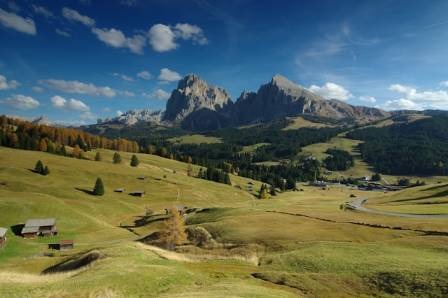
Late summer and autumn offer hiking with fewer crowds and crisper air. Meadows turn golden and red, creating a serene ambiance distinct from summer. Temperatures drop, and weather grows more variable—pack rain jackets and warm layers alongside lighter clothing. By October and November, snow may dust the Sciliar (Schlern) massif, as we experienced during our early November day trip, where light snow added magic without hindering hiking. Note that many facilities close by late October, and some cable cars halt operations until ski season.
Winter (December to March)
Snow transforms the plateau into a peaceful ski area linked to Val Gardena and the Dolomiti Superski network. The season typically starts in mid-December, catering to families and beginners with wide pistes. Cross-country trails, winter hikes, and other snowy activities abound, though temperatures often drop below freezing, especially at night.
Time of day
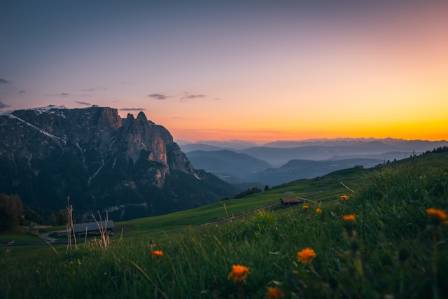
For fewer crowds and ideal light for photos, visit early morning or late afternoon. Staying on the plateau simplifies this, letting you avoid cable car schedules. If driving, arrive before 9:00 AM or after 5:00 PM during high season, and note the 11:00 PM to 6:00 AM parking ban. Mornings offer fresh air and mild temperatures, while afternoons—even warm summer ones—provide a lovely time to stroll and soak in the views. If staying for sunset, confirm cable car schedules unless you’re overnighting.
How long to spend at Alpe di Siusi
A day trip suffices to take in the views and enjoy a short hike, as we did on our first visit. Take the cable car up, explore for a few hours or all day, and return—perfect for a quick taste of its beauty.
For a deeper experience, stay 2 to 4 days in summer: with countless trails and activities, there’s plenty to fill your time. If skiing and combining with hiking and relaxation, 4 to 6 days may suit you better. Our three-night summer stay let us explore extensively, enjoy hotel amenities like pools and spas, and savor the area’s tranquility—we’d happily return for longer.
Where to stay near Alpe di Siusi
Accommodation on the plateau tends to be pricey, so nearby towns offer more budget-friendly options while keeping Alpe di Siusi accessible via cable car or car.
Conclusion
Alpe di Siusi (Seiser Alm), Europe’s largest mountain plateau nestled in the Dolomites, enchants visitors year-round with its expansive green meadows, striking mountain backdrops, and diverse outdoor opportunities. From summer hiking and cycling on gentle trails to winter skiing within the Dolomiti Superski network, it caters to various interests, while its unique flat terrain amid rugged peaks creates a one-of-a-kind landscape. Accessible via cable cars or cars (with seasonal restrictions), and offering accommodations ranging from value stays to luxury hotels on the plateau, it ensures a memorable experience. With practical amenities like mountain huts, drinking fountains, and clear trail markings, paired with stunning vistas and a peaceful ambiance, Alpe di Siusi stands as a standout destination for immersing oneself in the natural beauty of the Dolomites.