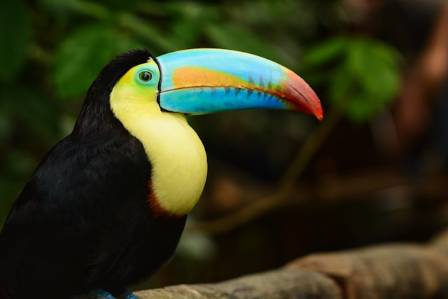
Picture us wandering through a dense, green rainforest, sunlight filtering through the canopy, and suddenly, there it is—the star of our journey: a toucan perched gracefully on a branch.
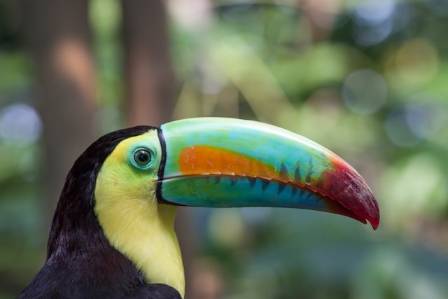
With its brilliantly colored bill, resembling a palette of rainbow hues, this bird is instantly recognizable and one of the most striking creatures of the neotropics.
We often catch sight of these energetic birds hopping between branches with a liveliness that matches the brilliance of their beaks.
A toucan stands out against the lush greenery, its vivid bill shining in the dappled sunlight, surrounded by the jungle’s teeming flora and fauna.
But toucans are more than just bright bills and stunning feathers—they lead complex, fascinating lives high in the treetops.
Despite the size of their bills, these tools are surprisingly light, thanks to a structure of air-filled cavities. They use them not only to reach and pluck fruit—their favorite snack—but also to playfully toss berries to one another. Imagine a fruity game of catch in the trees!
Toucans also play a crucial role in the forest. By eating fruit and dispersing seeds, they help new trees grow, making them essential gardeners of the rainforest.
Let’s dive into the vibrant world of toucans and explore their habits, homes, and why that colorful beak is so extraordinary.
The Colorful World of Toucans
In the tropical rainforests of Central and South America, toucans are celebrated for their lively plumage and dazzling bills. Together, these birds create a living rainbow amidst the green foliage.
The Rainbow Beak
Ever wondered why toucans have such multicolored beaks? Their striking bills are not just for show—they serve vital functions.
The beak, adorned in reds, blues, oranges, yellows, and greens, allows the toucan to reach fruits that other birds cannot. Beyond feeding, the bill helps regulate body temperature by releasing excess heat—essentially acting as a natural cooling system.
Feathers and Flight
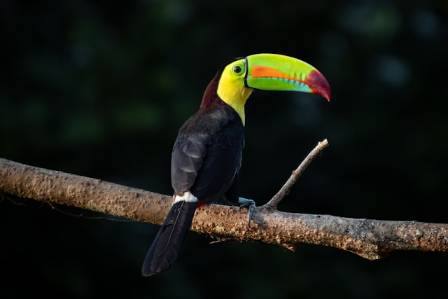
Toucans’ plumage is just as impressive as their beaks. Most have black feathers with accents of white, yellow, and occasionally red, giving them a sharp, stylish appearance that blends into shadows yet dazzles when sunlight hits.
Although they aren’t long-distance flyers, toucans move swiftly and directly through the trees. Their flight is bouncy and agile, perfect for navigating the complex canopy of their rainforest home.
Home and Diet
High in the treetops, toucans make their homes in tree hollows, often reusing abandoned woodpecker holes or natural cavities. These leafy neighborhoods stretch from southern Mexico to northern Argentina.
Toucans are mainly frugivores, feasting on bananas, guavas, mangoes, and other tropical fruits. Occasionally, they will eat insects, eggs, and small reptiles. By dispersing seeds through their droppings, they actively help shape the forest, acting as natural gardeners.
Social Life
Toucans are highly social birds, often seen in small flocks. These groups provide safety from predators and make foraging more efficient—and a lot more fun. Some species even toss fruit to one another, showing playful behavior in the treetops.
Communication is key in a toucan flock. They use a variety of calls, from croaks to squawks, each with a different meaning: greeting friends, warning of danger, or attracting a mate. Their large bills amplify these sounds, acting like natural megaphones.
Conservation
Despite their vibrant appearance, many toucans face threats from habitat loss and illegal capture for the pet trade. Forests are being cleared for agriculture and urban development, and some birds are poached because of their striking looks.
Conservation efforts are helping safeguard these rainbow-billed birds. Protected areas preserve the large trees they rely on, while community programs educate locals about the importance of keeping toucans safe. Laws also regulate their capture and trade, helping ensure that future generations can witness these spectacular birds in the wild.
Joining conservation can feel like an adventure: imagine trekking through the jungle, binoculars in hand, and spotting a flash of color as a toucan darts past. By understanding their challenges and taking action, we can help these remarkable birds continue to thrive, keeping the rainforest alive with color for years to come.