Introduction: The Global Appeal of Japanese Seafood Dishes
Japanese cuisine has captivated food lovers worldwide with its emphasis on freshness, precision, and balance, and among its most iconic offerings are sushi, sashimi, and nigiri. Yet, even seasoned diners often confuse these three dishes—wondering if sashimi is a type of sushi, or how nigiri fits into the mix. While all three originate from Japan and celebrate high-quality seafood, they are distinct in ingredients, preparation, and cultural context. Sushi revolves around vinegared rice, sashimi is pure raw seafood, and nigiri bridges the two with raw fish atop seasoned rice. Understanding their differences not only enhances the dining experience but also deepens appreciation for the craftsmanship and tradition behind each dish. Whether you’re ordering at a sushi bar or experimenting at home, this guide clarifies the nuances that make each of these Japanese culinary treasures unique.
What Is Sushi? The Foundation of Vinegared Rice
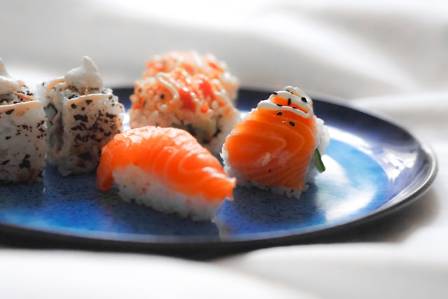
At its core, sushi is defined by vinegared rice (called sushi-meshi)—without this key ingredient, a dish cannot be classified as sushi. The name “sushi” derives from the Japanese word for “sour,” referencing the tangy flavor of the rice, which is seasoned with a mixture of rice vinegar, sugar, and salt. Contrary to popular belief, raw fish is not a requirement for sushi; traditional and modern variations include cooked seafood (such as tempura shrimp, grilled eel, or crab), vegetables (cucumber, avocado, carrot), tofu, or even fruits. Sushi comes in diverse forms: maki (rolled sushi), where rice and fillings are wrapped in dried edible seaweed (nori) or soy paper and sliced into rounds; temaki (hand rolls), cone-shaped nori filled with rice and ingredients; chirashi (scattered sushi), a bowl of sushi rice topped with raw or cooked seafood, vegetables, and garnishes; and inari (stuffed sushi), where seasoned rice is tucked into sweet, fried tofu pockets. The versatility of sushi lies in its ability to adapt to regional tastes—from classic Edo-style maki to fusion creations like sushi burritos or sushi cups—while retaining the essential element of vinegared rice that binds it all together.
What Is Sashimi? Pure, Fresh Raw Seafood
Sashimi is a standalone Japanese dish consisting of thinly sliced, high-quality raw seafood—no rice, nori, or other fillings included. The term “sashimi” translates roughly to “pierced body,” a reference to the traditional method of preparing fish by piercing and slicing it (though modern techniques focus on precise, clean cuts). Sashimi is typically made with saltwater fish like tuna (maguro), salmon (sake), mackerel (saba), yellowtail (hamachi), or shrimp (ebi), as saltwater environments reduce the risk of bacterial contamination compared to freshwater fish. The seafood must be “sushi-grade,” meaning it has been flash-frozen to kill parasites and handled under strict hygiene standards to ensure safety. Sashimi is served on a bed of daikon (white radish) shreds, which absorb excess moisture and add a crisp texture, alongside shiso leaves (perilla) for aroma, a small dollop of wasabi (Japanese horseradish) for heat, and pickled ginger (gari) to cleanse the palate between bites. Unlike sushi, sashimi highlights the pure flavor and texture of the seafood, making freshness the ultimate priority—each slice should be tender, firm, and free of fishy odors.
What Is Nigiri? The Perfect Marriage of Fish and Rice
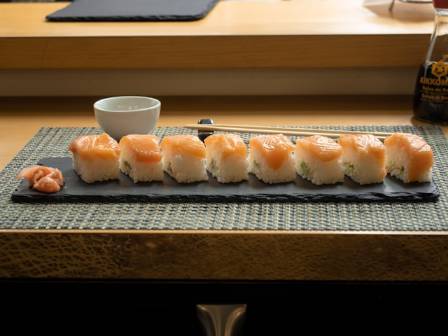
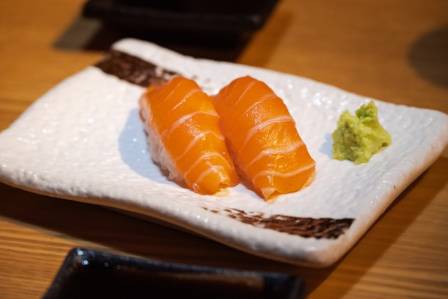
Nigiri occupies a middle ground between sushi and sashimi, combining the key elements of both: raw seafood (similar to sashimi) atop a hand-formed ball of vinegared rice (the foundation of sushi). This makes nigiri a type of sushi, though it lacks the nori wrapping or additional fillings of maki rolls. Traditional nigiri is crafted by sushi chefs (itamae) who press a small portion of sushi-meshi into an oval shape, then top it with a thin slice of sushi-grade raw fish (such as tuna or salmon) that has been lightly brushed with soy sauce or wasabi for flavor. Some variations may use a tiny strip of nori to secure the fish to the rice, but this is minimal and not required. Nigiri emphasizes balance—each bite should have equal parts rice and fish, with the tang of the vinegar rice complementing the delicate flavor of the seafood. Unlike sashimi, which showcases the fish alone, nigiri’s rice adds sweetness and texture that elevates the raw ingredient, making it a beloved choice for those who appreciate the harmony of Japanese culinary principles.
Core Ingredients: The Building Blocks of Sushi, Sashimi, and Nigiri
The quality of sushi, sashimi, and nigiri hinges on their ingredients, each selected for specific characteristics that define the dish. Sushi rice is the most critical component for sushi and nigiri—short-grain Japanese rice is preferred for its high starch content, which creates a sticky, chewy texture that holds together when shaped. Medium-grain rice can be a substitute, but long-grain rice is unsuitable as it lacks the necessary stickiness. The rice is seasoned with a precise ratio of rice vinegar (2 tablespoons), sugar (1 tablespoon), and salt (1 teaspoon) per cup of cooked rice, heated gently to dissolve the sugar and salt before being folded into the rice while it’s still warm. Nori (dried seaweed sheets) is used in maki and temaki sushi; it is made from red algae, has a salty-sweet umami flavor, and becomes pliable when lightly toasted or soaked. For seafood, sushi and nigiri use sushi-grade raw or cooked options, while sashimi relies exclusively on sushi-grade raw seafood. Popular fillings and toppings include tuna (akami, chutoro, otoro for different fat levels), salmon, shrimp, scallops, octopus (tako), and eel (unagi)—often glazed with a sweet soy sauce. Vegetables like cucumber (kappa), avocado, and carrot add crunch and freshness, while sauces like soy sauce (for dipping), wasabi (for heat), and spicy mayo (for fusion styles) enhance flavor.
Creative Sushi Variations: Beyond Traditional Rolls
While traditional sushi, sashimi, and nigiri remain beloved, modern fusion cuisine has spawned creative variations that put a unique twist on these classics. Sushi Burrito (also called sushirrito) is a popular fusion dish that combines sushi ingredients with the portability of a burrito: a large sheet of nori is spread with sushi rice, then piled high with raw fish (tuna, salmon), avocado, fresh vegetables (cucumber, radish), and sauces (spicy mayo, wasabi aioli) before being wrapped tightly into a burrito shape. Its large size allows for bold flavor combinations, making it a favorite for casual meals. Ahi Sushi Cups are a no-roll alternative that’s easy to prepare: muffin tins are lined with parchment paper, filled with pressed sushi rice, and chilled until firm; the cups are then topped with raw tuna (ahi), avocado, tobiko (fish roe), and a drizzle of soy sauce or sesame oil. Aburi Nigiri (flame-seared nigiri) adds a smoky dimension—sushi-grade fish atop rice is lightly torched to caramelize the surface, often brushed with a sweet-savory glaze for extra flavor. Veggie Sushi Rolls cater to plant-based diets, using fillings like roasted sweet potato, tempura asparagus, pickled daikon, and vegan cream cheese wrapped in nori or rice paper. These variations honor the core principles of Japanese cuisine (freshness, balance) while embracing global flavors and convenience.
Frequently Asked Questions: Clarifying Common Confusions
Why is sashimi more expensive than sushi?
Sashimi is typically more expensive than sushi because it relies solely on high-quality sushi-grade raw seafood—there are no filler ingredients like rice, vegetables, or nori to offset the cost. The seafood must be sourced from reputable suppliers, flash-frozen to meet safety standards, and handled with extreme care to preserve freshness, all of which contribute to a higher price point. Sushi, by contrast, includes rice and other ingredients that reduce the proportion of expensive seafood per serving.
Which is healthier: sushi or sashimi?
The healthiness of sushi vs. sashimi depends on dietary goals. Sushi contains rice, making it higher in carbohydrates and fiber than sashimi, but it may also include added fat, sodium, or sugar from sauces (like sweet soy glaze or spicy mayo) or fried fillings (tempura). Sashimi is a nutrient-dense option: it is high in protein, heart-healthy omega-3 fatty acids, and essential vitamins (like vitamin D and B12) with minimal carbs. However, sashimi can contain mercury (especially larger fish like tuna), so it should be consumed in moderation to avoid mercury poisoning. Both are healthy choices when enjoyed as part of a balanced diet, with sushi offering more sustained energy from rice and sashimi providing a lean protein boost.
Is nigiri a type of sashimi?
No, nigiri is not a type of sashimi—it is a type of sushi. The key distinction is the presence of vinegared rice: sashimi is pure raw seafood without rice, while nigiri combines raw seafood with a base of sushi rice. While both use high-quality raw fish, their core ingredients and classifications are distinct.
How should I eat sushi, sashimi, and nigiri?
For sushi rolls (maki), use chopsticks or your hands to pick up a piece, dip the fish side (not the rice) lightly in soy sauce (to avoid breaking the rice), and eat it in one bite if possible. For nigiri, hold it with chopsticks or fingers, dip the fish side in soy sauce (or use a small amount of wasabi between the rice and fish), and consume in one bite to preserve the balance of flavors. For sashimi, pick up a slice with chopsticks, dip lightly in soy sauce mixed with a tiny bit of wasabi (if desired), and eat it plain—pickled ginger is meant to cleanse the palate between slices, not be eaten with the sashimi itself.