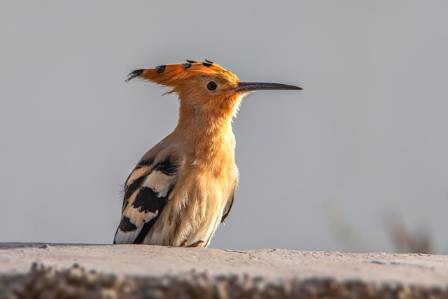
The hoopoe possesses an onomatopoeic name, much like the cuckoo, derived from its soft and far-reaching "poo-poo-poo" vocalization. While these birds remain mostly quiet outside of the mating period, males will perform their repetitive yet melodic songs for extended durations during the spring and summer months, frequently engaging in vocal competitions with nearby rivals.
Habitat and Distribution Across Europe
Although migratory hoopoes are sighted in Britain annually, it is quite uncommon for breeding pairs to establish nests there. These birds have a preference for warmer climates, leading to higher population densities around the Mediterranean. However, shifting global temperatures may eventually push their breeding territories further north. Spain currently hosts the largest European population, though the species is also a common sight in Portugal, Greece, the Balkans, Italy, and southern France.
Hoopoes flourish in regions characterized by low-intensity agriculture where pesticide use is kept to a minimum. They prefer foraging on open patches of dirt or very short grass. Interestingly, in England, visiting migrants are known for their peculiar habit of frequenting the well-manicured lawns of vicarages.
Dietary Habits and Foraging Behavior
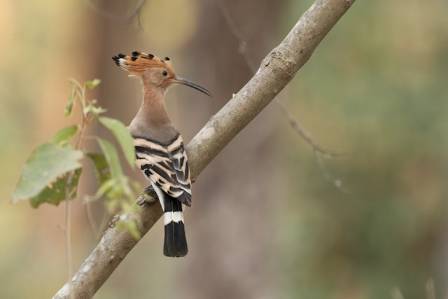
The hoopoe’s diet is almost entirely carnivorous, focusing primarily on large insects along with their pupae and larvae. They are particularly drawn to animal waste and dung piles in their search for beetles, using their long, downward-curved beaks to probe the earth. When hunting for food, they often ignore the presence of humans, allowing for close observation. However, if they are startled into flight, they almost always flare their distinctive crests upon landing.
Nesting Customs and Raising Young
Preferred nesting locations include cavities in stone walls, embankments, or trees, though the birds will also adopt appropriately sized nest boxes. In line with many species that nest in holes, their eggs are pale and lack markings. The task of incubation is handled solely by the female.
Sanitation is notably lacking in a hoopoe's nest. Because the adults do not clear away the waste produced by their offspring, the nesting site quickly becomes soiled and develops a pungent odor. In fact, experienced naturalists often locate active nests simply by following the scent.
Physical Traits and Global Presence
Hoopoes are partially migratory; while many birds in the northern and southern parts of their range move toward warmer regions for the winter, some stay in their breeding territories year-round. While no other bird in Europe resembles the hoopoe, it does have a very similar relative living in Africa. The species is also widespread throughout India and has even been spotted at altitudes of 26,000 feet on Mount Everest.
Visually, males and females share nearly identical plumage, though the female's coloring is often slightly more muted. Fledglings recently emerged from the nest bear a strong resemblance to the adult female.
Cultural Folklore and Superstitions
A wealth of mythology surrounds the hoopoe. Ancient legends suggest the bird was a trusted confidant and a favorite of King Solomon. Additionally, traditional lore holds that hearing a hoopoe sing before the autumn wine pressing is an omen of a high-quality vintage.