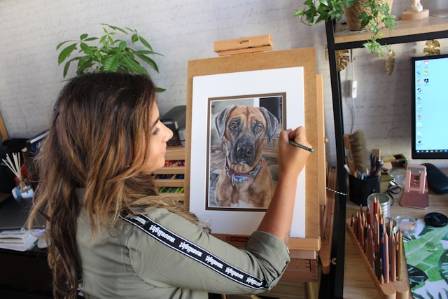
The frustration of working on flimsy paper is something almost every artist knows—warping, buckling, or even tearing through the surface can ruin a piece in seconds. It’s easy to imagine how many people have felt discouraged enough to give up entirely because of it. If only more artists discovered illustration board sooner—a sturdy, reliable surface that can handle charcoal, paint, and more without falling apart.
The first time you use illustration board, it can feel like a total game changer. But before jumping in with your paints or pencils, there’s quite a bit to understand: sizes, thicknesses, surface types, compatible media, brands, cutting techniques, framing, and how it differs from other boards at the art store. This guide covers everything you need to know.
Disclaimer: This article may include affiliate links. I only recommend products I personally use or would purchase myself.
What Is Illustration Board?
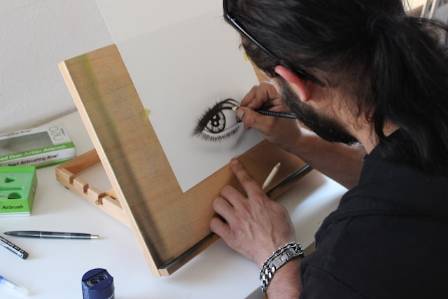
Illustration board is a thick, rigid surface created by mounting a sheet of textured, absorbent paper onto a stiff backing such as cardboard. It has some weight to it and is designed to be used on only one side. Because of its durability and cost, it’s typically reserved for finished artwork rather than sketches or rough drafts.
One major benefit is that you don’t need a separate drawing board—the backing already provides solid support. It also eliminates the need for mounting before working. Many artists use illustration board when creating pieces intended for scanning and reproduction.
If you’re aiming for long-term preservation, pay attention to the board’s composition. Not all illustration boards are archival. For the best longevity, choose boards made from 100% cotton (rag) and labeled acid-free, since acidic materials can yellow over time.
There are two primary surface types: cold press and hot press.

Cold Press vs. Hot Press
Cold press (vellum) has a slightly rough, textured surface. This “tooth” helps grip heavier or softer media like charcoal, pastels, watercolor, acrylics, and tempera.
Hot press (plate), on the other hand, is smooth. This allows tools like pens, markers, and pencils to glide easily, making it ideal for fine detail, clean lines, and smooth gradients.
That said, these categories aren’t strict rules. Artists often experiment—using charcoal on a smooth surface or ink on textured paper—to to achieve unique effects.
You can also find boards designed specifically for certain media, such as watercolor illustration boards that offer extra absorbency.
Illustration Board vs. Bristol vs. Poster Board
These materials are often confusing, but they serve different purposes:
Bristol board is lighter and can be used on both sides. It’s generally considered higher quality and more suitable for archival work, though in practice many artists use it interchangeably with illustration board.
The poster board is cheaper and lower quality. It’s commonly used for signage, school projects, or casual art. Unlike illustration board and Bristol, it’s available in many colors.
Available Sizes
Illustration boards come in a range of standard sizes. The smallest is typically around 10 × 15 inches (1/8 size), while the largest is about 30 × 40 inches (full size).
Common options include:
1/8 (10 × 15 inches)
1/4 (15 × 20 inches)
1/2 (20 × 30 inches)
Full (30 × 40 inches)
These fractional labels refer to proportions of the full sheet—not thickness. Each size is available in multiple thicknesses.
Thickness Options
Thickness varies by brand and intended use, usually ranging from about 1 mm to 3 mm.
Thicker boards are better for wet media like watercolor, as they resist warping and absorb moisture more effectively. Keep in mind that thickness is different from ply—it simply refers to how thick the board is overall.
Choosing the Right Media
You can use almost any medium on illustration board, but results depend on the surface type.
Cold press (vellum) works well with:
Graphite and colored pencils
Charcoal and sketching sticks
Ink and markers
Pastels (soft and oil)
Mixed media and collage
Light watercolor washes
Hot press (plate) is best for:
Graphite and colored pencils
Ink and markers
Mixed media and collage
Ultimately, experimentation is key. Trying different brands and surfaces will help you find what suits your style best.
How to Cut Illustration Board
You may need to cut illustration boards to resize finished work or divide larger sheets. Because it’s thick, cutting requires precision and steady hands.
Tools needed:
Cutting mat or scrap cardboard
Utility knife or X-Acto knife
Metal ruler or T-square
Pencil
Sandpaper
Steps:
1.Place the board on a cutting surface near the edge of a sturdy table.
2.Use a ruler or T-square to mark your cutting line.
3.Hold the ruler firmly and run the knife along its edge in a smooth motion.
4.Repeat the cut if necessary until it goes through.
5.Smooth rough edges with sandpaper if needed.
Don’t worry if your first attempts aren’t perfect—this is a skill that improves with practice.
How to Frame Illustration Board
Framing adds a professional finish and protects your work. Proper mounting is especially important.
Mounting keeps your artwork from touching the glass, which prevents smudging—especially for charcoal or graphite pieces. It also protects edges from damage inside the frame.
What you’ll need:
Mounting board
Knife and ruler
Pencil
Masking or paper tape
Mounting boards come in different qualities:
Museum grade (highest quality)
Conservation grade (mid-range)
Standard (budget-friendly)
They’re also available in various colors and thicknesses.
Basic process:
1.Measure your artwork and decide on margins.
2.Cut the mounting board to size, including extra space for borders.
3.Draw and cut out a window opening.
4.Place your artwork behind the mount.
5.Tape it in place from the back.
6.Insert into a frame, ensuring the glass doesn’t touch the artwork.
Where to Buy Illustration Board
You can find illustration boards at local art supply stores or online. Popular brands include Strathmore, Canson, and Crescent. Availability will vary depending on location and store inventory.
Final Thoughts
Illustration board comes in many variations—different sizes, thicknesses, textures, and qualities. Choosing the right one depends on your medium and artistic preferences.
Cold press (vellum) is ideal for textured, expressive work, while hot press (plate) suits detailed and smooth applications. The best way to understand the material is simple: use it, experiment, and see what works best for you.