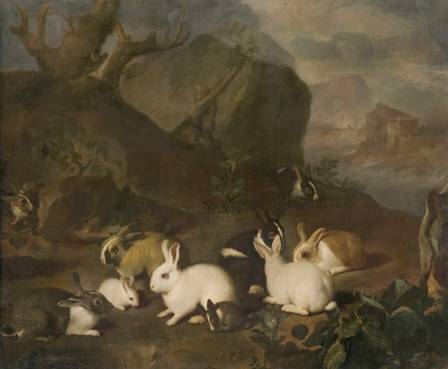
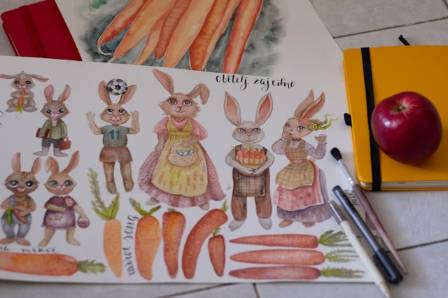
Rabbits have inspired a wide range of artworks, appearing in contexts from religious paintings to cartoons. They have been depicted as both mysterious and mischievous. Here is a selection of the most notable rabbits in art.
Titian's Madonna of the Rabbit
One of the most beautiful rabbits in art appears in Titian’s Madonna of the Rabbit at the Louvre. The white bunny evokes tenderness and childhood innocence while also carrying theological meaning as a symbol of the mystery of the Incarnation. In Renaissance paintings, the young Christ is often shown with animals, from birds to cats, but Titian’s rabbit captures one of the most natural and charming childhood scenes in religious art.
Albrecht Dürer's 1502 Rabbit or Hare
Albrecht Dürer’s 1502 work focuses entirely on a rabbit—or perhaps a hare—without including humans or landscapes. Unlike Titian, who places the rabbit within a human-centered scene, Dürer examines the creature on its own, creating a sense of enigma. Viewers are drawn to wonder about the animal’s thoughts and perceptions, making this a serious and contemplative depiction of a rabbit.
John Tenniel's White Rabbit in Alice in Wonderland
John Tenniel’s Victorian illustration of the White Rabbit from Lewis Carroll’s Alice in Wonderland presents a rabbit in human clothes, standing upright and observing a pocket watch. Tenniel’s meticulous rendering gives the rabbit an uncanny realism that has fascinated audiences for generations. Moving away from Titian’s familiar family scene, the rabbit in this illustration takes on a more surreal and imaginative role.
Jeff Koons's Rabbit
Jeff Koons’s Rabbit is cast from an inflatable toy and finished in reflective silver. This work transforms a simple bunny into a surreal, almost ethereal figure. The shiny, untouchable surface makes it a metaphor for art itself—light, form, and reflection rather than something tangible. Koons’s creation challenges viewers to reconsider perception, giving the rabbit a dreamlike quality.
Bugs Bunny
Finally, there is Bugs Bunny, the iconic animated rabbit created in the late 1930s by a team including Tex Avery. With his slender design, wisecracking personality, and constant energy, Bugs represents the ultimate expression of the rabbit in modern popular culture. In contrast to cute mice or mischievous cats in cartoons, Bugs Bunny embodies freedom, cleverness, and heroism, cementing the rabbit as a symbol of spirited individuality.

These five examples show the diverse ways artists have represented rabbits, from symbols of innocence and spirituality to figures of humor, imagination, and cultural iconography. They demonstrate the enduring fascination with this simple yet versatile creature in the history of art.